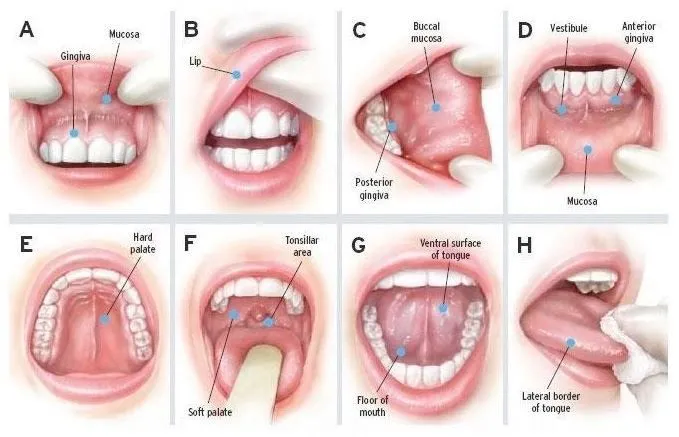
What is a biopsy and why is it needed?
A biopsy is the removal of a small tissue sample for microscopic examination. It’s recommended when there’s an area in the mouth that looks abnormal, such as a sore that isn’t healing, a lump, or a discolored patch. A biopsy helps us determine whether the tissue is benign, precancerous, or something that requires treatment.
Does getting a biopsy hurt?
No. The area is completely numbed with local anesthesia, so you won’t feel pain during the procedure. Some mild soreness or tenderness afterward is normal and typically resolves within a few days.
How long does the procedure take?
Most biopsies are completed in under 30 minutes, depending on the location and size of the lesion.
When will I get the results?
Tissue samples are sent to a specialized pathology lab. Results typically return within 7 to 14 business days. We will call you as soon as we receive them and discuss the findings together.
Is every biopsy result serious?
Not at all. Many biopsies confirm that the tissue is completely benign. The purpose is to rule out anything concerning and give you clarity and peace of mind.
What happens if the biopsy shows something abnormal?
If the results show dysplasia (precancerous changes), an infection, or other pathology, we’ll review all findings and discuss your next steps, which may include observation, further testing, or treatment.
Are stitches needed after a biopsy?
Sometimes. Small biopsies often heal on their own, but we may place a suture to help the area close properly and reduce discomfort.
How should I care for the area afterward?
- Avoid brushing directly over the area for a day or two
- Rinse gently with salt water or a prescribed mouth rinse
- Eat soft foods and avoid spicy or crunchy items
- Take any medications we provide or recommend
Are there risks with a biopsy?
Biopsies are very safe. Mild bleeding, swelling, or tenderness is common, but serious complications are rare. We’ll give you detailed aftercare instructions to ensure smooth healing.
Can I go back to work the same day?
Yes, most patients return to normal activity right after the procedure. If sedation is used or if the area feels sore, you may prefer to take the rest of the day to rest.