
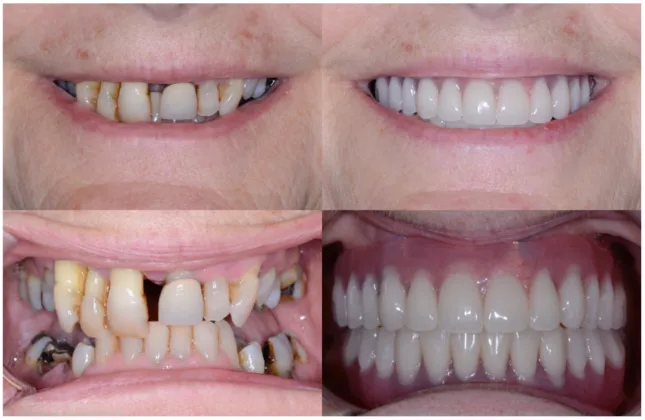
What’s the difference between All-on-4 and All-on-X?
“All-on-4” refers to a full arch of teeth supported by four dental implants. “All-on-X” is a broader term that allows for additional implants—usually five or six—depending on your bone quality, anatomy, and clinical needs.
Am I a candidate for All-on-4?
Most patients with missing teeth or those wearing dentures are potential candidates. However, you’ll need to be in generally good health and have enough bone to support the implants—or be open to bone grafting if needed.
Who may not be a candidate for All-on-4?
Some medical or lifestyle factors can affect your candidacy. These include:
- Uncontrolled diabetes
- Heavy smoking
- Poor oral hygiene or untreated gum disease
- Certain autoimmune or bone disorders
- Ongoing cancer treatment (such as radiation to the jaws)
- Severe bruxism (teeth grinding) without management
We’ll assess your full medical and dental history to determine what’s right for you.
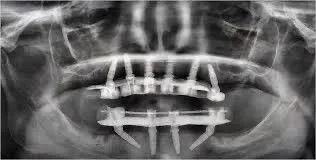
Do I need bone grafting before getting All-on-4?
The All-on-4 technique strategically places implants at angles to maximize existing bone. However, in certain cases—especially with significant bone loss—some grafting may still be recommended in order to improve long term success.
Can I get my new teeth the same day as surgery?
Yes. In most cases, we place a temporary set of fixed teeth immediately after implant placement. These let you speak, smile, and eat soft foods while your implants heal and your final prosthesis is crafted.
How long is the recovery time?
Initial healing takes about a week, and most patients return to work in just a few days. Full integration of the implants with your bone (osseointegration) takes 4–6 months.
Will I be put to sleep during the procedure?
We offer local anesthesia, and sedation options are available to help you stay relaxed and comfortable throughout the procedure. You won’t feel pain during surgery.
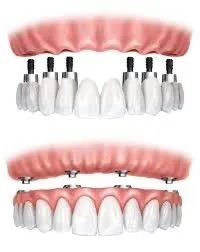
What are the teeth made of?
The final bridge is typically made of zirconia or a reinforced acrylic over a titanium framework. We’ll recommend the material that best fits your needs, balancing strength, durability, and aesthetics.
What can I eat after surgery?
You’ll need to follow a soft-food diet during the initial healing phase. We’ll provide a detailed guide, but options often include eggs, yogurt, soft fish, mashed vegetables, and smoothies.
How do I clean my All-on-4 implants?
You’ll use special tools like water flossers, interproximal brushes, and angled toothbrushes to keep your implants clean. Routine professional maintenance is essential to long-term success.
How long does the All-on-4 solution last?
With proper care, the implants themselves can last a lifetime. The prosthetic bridge may last 10–20 years or more, depending on maintenance and wear.
Are there risks or complications?
As with any surgery, there are potential risks, though complications are uncommon. These may include swelling, bruising, infection, temporary numbness, or implant failure. We’ll guide you every step of the way to minimize risk.
Is there a chance my implants could fail?
Implant success rates are very high—typically 95% or more. Factors that increase risk include smoking, poor oral hygiene, uncontrolled diabetes, and lack of regular maintenance.
Will it look and feel natural?
Yes! All-on-4 restorations are designed to function like natural teeth and are custom-shaped to suit your facial structure. Most patients say they forget they’re not real teeth.
Am I too old for this treatment?
Age is not a limiting factor. As long as you're healthy enough for minor oral surgery and have sufficient bone support, you're likely a good candidate—even in your 70s or 80s.