
How is Emdogain different from a bone graft?
While bone grafts are used to fill in space and encourage healing, Emdogain actively stimulates your body to regenerate the tissues that were lost, creating a more natural result.
Is Emdogain safe?
Yes. Emdogain is derived from proteins found in developing tooth structures and has been used safely in millions of procedures worldwide.
Does it hurt more than traditional periodontal surgery?
No. The application of Emdogain does not increase discomfort. In fact, many patients experience smoother healing when it's used.
Can Emdogain save a tooth that might otherwise need extraction?
In some cases, yes. If the supporting bone loss isn’t too advanced, Emdogain may help regenerate enough tissue to stabilize the tooth and avoid extraction.
How long does it take to see results?
While initial healing takes a few weeks, bone and tissue regeneration can continue for several months as your body gradually rebuilds the supporting structures.
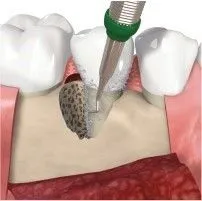
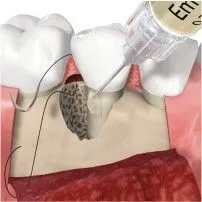
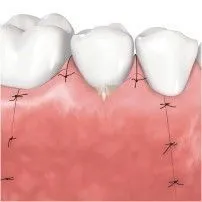
- Accessing and Cleaning the Root Surface
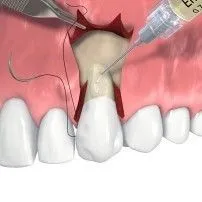
After the area is numbed with local anesthetic, Dr. Sakhai will gently open the gum tissue with a small incision to access the area of bone and attachment loss. The root surface is thoroughly cleaned, and any hard or soft deposits are carefully removed. - Applying Emdogain
Emdogain is then applied directly to the cleaned root surface using a small syringe. This biologic gel helps stimulate the regrowth of lost periodontal structures, such as bone, cementum, and ligament. - Closing the Site
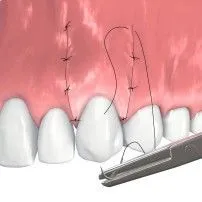
Once the area has been treated, the gum tissue is repositioned and sutured in place to support healing.
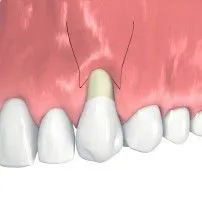
- Accessing the Root Surface
After numbing the area with local anesthetic, Dr. Sakhai gently creates a small flap in the gum tissue to expose the root surface and the area of bone loss beneath it. - Applying Emdogain
The root surface is carefully cleaned, and Emdogain gel is applied directly onto the root. This biological gel stimulates the natural regeneration of the tissues that support your teeth. - Securing the Area
The gum tissue is repositioned over the treated area and secured with sutures. In many cases, this procedure is performed along with a gum graft to enhance healing and achieve optimal results.