
What is functional crown lengthening, and why do I need it?
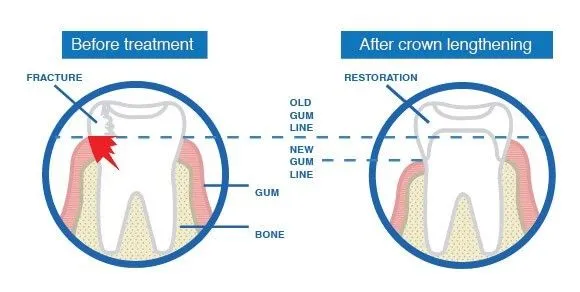
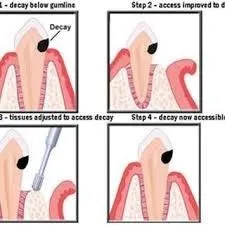
Functional crown lengthening is a surgical procedure performed when there isn’t enough healthy tooth visible above the gumline to securely place a crown or filling. This may happen due to deep decay, fracture, or wear near the gumline. The procedure exposes more of the tooth so your restoration can fit properly and last longer.
What is biologic width, and why is it important?
Biologic width is the natural, protective space between the gum attachment and the bone surrounding your teeth. Think of it like the small gap between your fingernail and the skin beneath it—it acts as a vital barrier that shields the underlying structures from irritation or infection. When a dental restoration (like a crown or filling) encroaches on this space, it’s similar to a splinter lodged under the nail: it can trigger chronic inflammation, gum recession, or even bone loss. Functional crown lengthening helps re-establish a healthy biologic width, ensuring long-term stability and protecting the tooth and surrounding tissues.
Will my tooth look longer after the procedure?
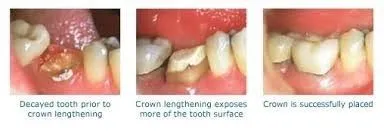
Yes, the tooth will often appear slightly longer because more of its surface is exposed. This change is usually not noticeable when it involves back teeth, but even in the front, it is done with careful consideration to aesthetics and overall smile balance.
Is the procedure painful?
Most patients find the procedure very tolerable. Local anesthesia is used during the procedure, and discomfort afterward is usually mild to moderate. Any soreness can typically be managed with over-the-counter pain relievers.
How long is the recovery time?
Initial healing takes about 1 to 2 weeks, but the gum and underlying bone need more time to stabilize before final restoration. Most patients can return to regular daily activities the day after surgery.
When can I get my crown or filling placed?
We generally recommend waiting 6 to 8 weeks before completing your final restoration. This gives the gums and supporting tissue adequate time to heal and settle, ensuring a stable and long-lasting result.
What happens if I skip crown lengthening and just place the restoration?
Placing a crown too close to the bone or too far under the gumline can lead to chronic inflammation and discomfort, gum recession, or failed dental work. In some cases, your dentist may not be able to seat the crown at all. Functional crown lengthening ensures the area is healthy and stable enough to support the restoration.
Will the tooth be more sensitive after the procedure?
Some sensitivity, especially to cold, is normal in the weeks after surgery. This generally improves as healing progresses and once the tooth is restored and sealed.
Can the gum tissue grow back and cover the tooth again?
While some minor reshaping of the gumline occurs during healing, the goal of the procedure is to create a stable, long-term position of the gum around the newly exposed tooth. It’s rare for the gum to completely regrow over the area once it's been surgically repositioned. In rare cases the gums grow back a revision maybe necessary.
Can the gum tissue grow back and cover the tooth again?
After functional crown lengthening, the gum tissue is carefully repositioned to establish a stable, healthy margin around the exposed tooth. While some minor reshaping or settling can occur during healing, it’s uncommon for the gum to fully regrow over the area. In rare cases, if the tissue rebounds significantly, a minor revision may be needed to maintain proper exposure for your restoration. Most patients, however, experience long-term stability without the need for additional treatment.