
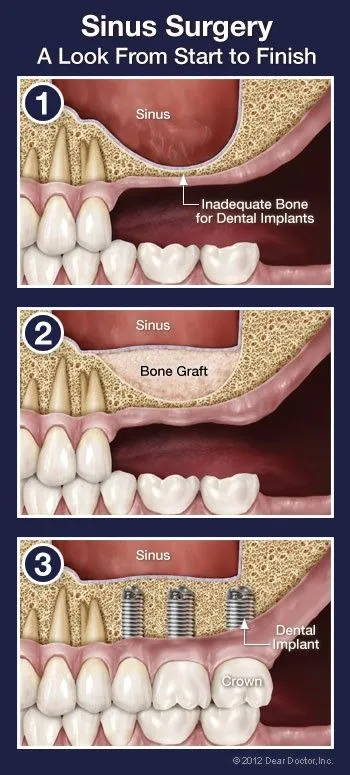
What is a sinus augmentation?
A sinus augmentation (or sinus lift) is a surgical procedure that adds bone to the upper jaw in the area of the molars and premolars to make it possible to place dental implants. It involves gently lifting the sinus membrane and placing bone graft material beneath it.
Why would I need a sinus lift before getting an implant?
If the bone in your upper jaw is too thin or if your sinus cavity is too close to where the implant needs to go, there may not be enough bone to support the implant securely. A sinus lift creates the bone height necessary for a stable, long-lasting implant.
What are the different types of sinus lift procedures?
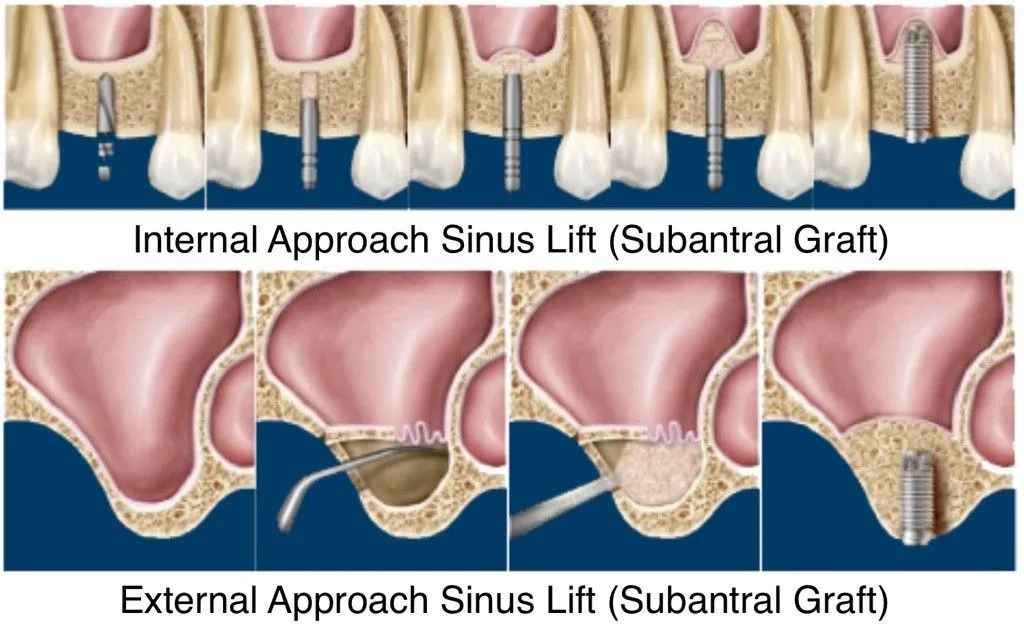
There are two main techniques:
- Internal (Vertical) Sinus Lift – A less invasive method used when only a small bone boost is needed. The sinus is gently lifted through the implant site, and the implant is often placed at the same time.
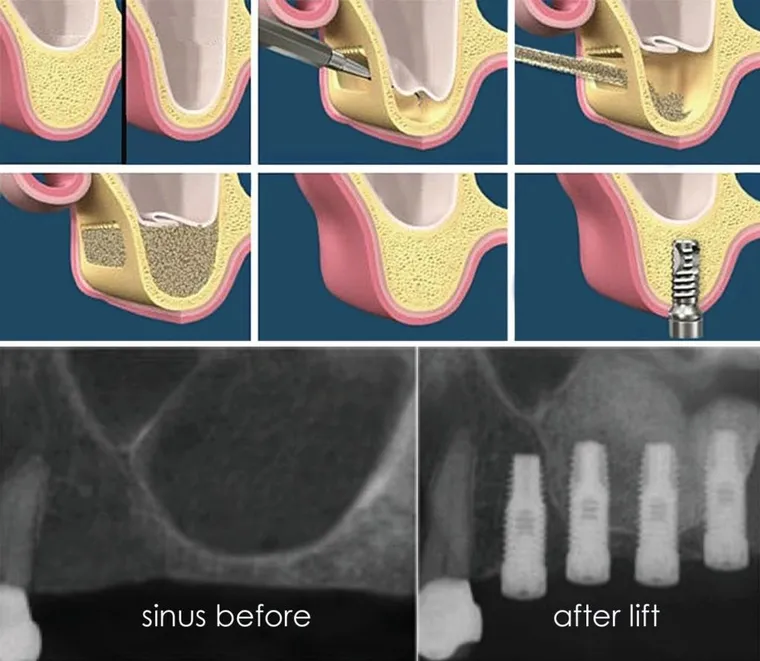
- Lateral Window Sinus Lift – Used when more bone is needed. A small window is made on the side of the upper jaw to lift the sinus and add graft material. This approach allows for greater bone buildup.
Dr. Sakhai will recommend the best option based on your anatomy and bone levels.
Is the procedure painful?
Most patients tolerate the procedure very well with mild to moderate post operative pain. It is typically performed under local anesthesia with optional sedation for comfort. You may experience swelling or soreness for a few days, which can be managed with over-the-counter or prescribed medication.
What can I expect in terms of swelling and bruising?
Swelling is normal and typically peaks around 48–72 hours after surgery, then subsides over the next few days. Some patients also experience mild to moderate bruising, particularly in cases involving larger grafts or multiple surgical sites. Cold compresses and prescribed medications help reduce inflammation. We’ll provide specific guidelines to manage both.
What type of bone is used?
We use safe, biocompatible bone graft materials tailored to your specific case. This may include your own bone (autograft), donor bone (allograft), bone from an animal source such as bovine (xenograft), or synthetic materials. The choice is based on your health, preferences, and clinical needs.
How long does it take to heal after a sinus augmentation?
Healing generally takes between 4 to 9 months, depending on the type of bone graft used and how much bone was added. Once the graft has successfully integrated, dental implant placement can be scheduled.
Are there risks or complications?
As with any surgical procedure, there are some risks, although complications are rare. These may include sinus membrane perforation, infection, minor bleeding, or graft failure. Proper planning and post-operative care significantly reduce these risks.
What can I expect after the procedure?
You’ll receive detailed post-operative instructions, including how to care for the area, medications to use, and what to avoid (such as blowing your nose or using straws). Most patients return to normal routines within a few days.
Will my face look or feel different afterward?
No noticeable changes in facial appearance occur. The added bone supports your implant site internally and does not affect your outward facial profile.
Can implants be placed at the same time as the sinus lift?
In some cases, yes—particularly if there is enough existing bone to stabilize the implant immediately. However, in more advanced bone loss cases, a staged approach is used where the sinus lift is performed first, followed by implant placement after healing.